The Take
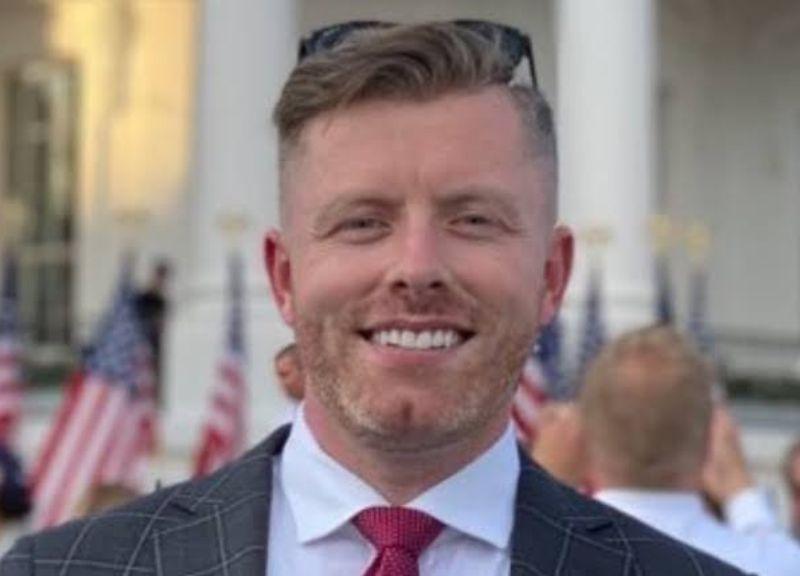
On April 28, Rogan O’Handley – better known by his social media handle DC_Draino – delivered the first question at the White House press conference
"In Trump's first 99 days, we've seen a coordinated assault on the rule of law by radical judges, thwarting his agenda with an unprecedented level of national injunctions. These judges are providing more due process to violent MS-13 and Tren de Aragua illegal aliens than they did for American citizens who peacefully protested on January 6th," he said
He continued: “It would be utterly ridiculous for full trials and appeals for the more than 15 million illegal aliens that came across our border under Joe Biden…Many are now calling for Trump to circumvent these radical judges and consider suspending the writ of habeas corpus solely for these illegal aliens in accordance with the terms of Article 1, Section 9 of the United States Constitution, which explicitly allows for such a measure when there is a rebellion or invasion"
At the time, many were not calling for a suspension of habeas corpus. That question went viral, though, and kicked off a national conversation among Republicans. And now, many are
O’Handley continued: “Historic assaults on our republic require reciprocal action from our government. Can you please let us know if and when the Trump administration is planning to suspend the writ of habeas corpus to circumvent these radical judges…and to start shipping out illegals en masse?"
White House Press Secretary Karoline Leavitt replied, "I have not heard such discussions take place, but I can assure you [the president is] open to all legal and constitutional remedies”
Habeas corpus – literally “you should have the body” in Latin – is a Constitutional right that requires the government to provide a public reason for detaining someone
It allows individuals, including non-citizens, to petition courts to review whether their detention by immigration authorities is lawful
The Constitution says, “The Privilege of the Writ of Habeas Corpus shall not be suspended, unless when in Cases of Rebellion or Invasion the public Safety may require it”
Alexander Hamilton once wrote that the “establishment of the writ of habeas corpus” is a “greater security to liberty and republicanism” than nearly any other part of the Constitution. The Supreme Court later called it “the fundamental instrument for safeguarding individual freedom against arbitrary and lawless state action”
Only three presidents have suspended it: President Abraham Lincoln during the Civil War; President Ulysses S. Grant during Reconstruction; and President Franklin D. Roosevelt during World War II
In a 2008 Supreme Court case, Boumediene v. Bush, the Supreme Court ruled 5-4 that even Guantanamo Bay detainees were entitled to the right
As the conservative Justice Anthony Kennedy wrote for the majority at that time, “The laws and Constitution are designed to survive, and remain in force, in extraordinary times”
O’Handley – who commands a 7M+ social following – and other influential conservatives want to toss this right out for one specific reason. As he laid out on Steve Bannon’s podcast earlier this month, “A lot of this has to do with the 2030 census”
In O’Handley’s telling, Democratic states are trying to counter their declining populations by importing illegal immigrants
While immigrants can’t vote, they are counted in the census, which determines the allocation of House seats and electoral votes
If current trends – an exodus from blue states in the north to red states in the Sun Belt – hold, projections show Democratic states losing up to 12 House seats and Electoral College votes to Republican states by 2030
O’Handley and his supporters believe that if a Republican loses in 2028, a Democratic president can let in millions more illegal immigrants, countering the decline they would otherwise see in 2030
Suspending habeas corpus is therefore not solely about conducting deportations as Trump has pledged, but “about power, pure and simple,” to use his words
“This is for the survival of the country,” O’Handley said, “Which is why I think in hindsight, in historical hindsight, President Trump will look and emerge as one of our best presidents if he does this [suspends habeas corpus] because he will truly have saved the republic”
But can Trump do that?
The Constitution allows habeas corpus to be suspended only in cases of rebellion or invasion, and only when public safety requires it
Recently, the White House has argued that the surge in illegal immigration constitutes an “invasion,” a novel legal theory aimed at justifying mass deportations under laws like the Alien Enemies Act – though it's unclear what legal weight that argument holds in court
The next question is who has the authority to suspend habeas corpus
The Suspension Clause appears in Article I, which outlines the powers of Congress, suggesting that only Congress can authorize suspension. That interpretation was tested during the Civil War when President Lincoln unilaterally suspended habeas corpus
In Ex parte Merryman (1861), Chief Justice Roger Taney ruled that Lincoln had no authority to do so without Congressional approval
Lincoln ignored the ruling, but Congress later passed legislation effectively endorsing his suspension
During Reconstruction, President Grant suspended habeas corpus in parts of the South to combat Ku Klux Klan violence – but only after receiving explicit Congressional approval via the Ku Klux Klan Act of 1871
In World War II, President Roosevelt did not formally suspend habeas corpus but used wartime powers to intern over 110,000 Japanese Americans. The Supreme Court’s rulings were mixed: It upheld the internment policy in Korematsu v. United States (1944), but in Ex parte Endo that same year, it ruled the government could not detain a loyal US citizen without charges, effectively restoring habeas corpus in that context
So, it remains unclear whether this is something that Trump would be able to do
What is not unclear, though, is the growing momentum that this idea has attained since O’Handley’s question on April 28
Earlier this month, White House Deputy Chief of Staff Stephen Miller said, “The Constitution is clear and that, of course, is the supreme law of the land, that the privilege of the writ of habeas corpus could be suspended in time of invasion…So that’s an option we’re actively looking at”
This week, Homeland Security Secretary Kristi Noem was asked to define habeas corpus
"Habeas corpus is a constitutional right that the president has to be able to remove people from this country," she replied
Then she added: “I support habeas corpus…I also recognize that the President of the United States has the authority under the Constitution to decide if it should be suspended or not"
You can read more stories like this in our app
Roca makes staying informed actually fun. Read more stories, solidify your learning with quizzes, play minigames, earn XP, level up, and climb leaderboards